Do you want a built-in grinder?
What an all-in-one espresso machine gives you, what it costs you, and how to tell which side you're on.
By the Espresso Rated editors · 5 min read · Published Nov 13, 2026
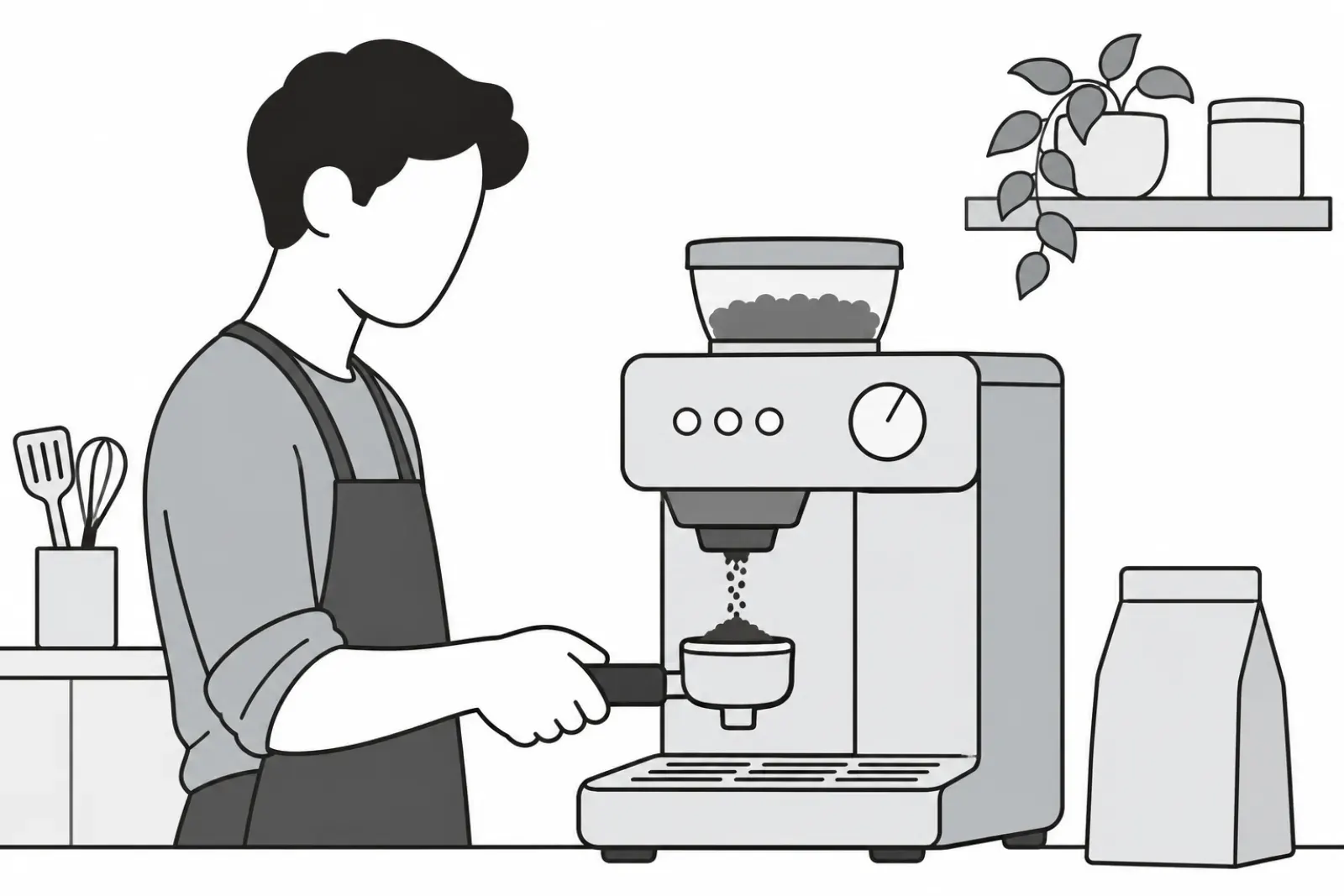
You're done with pods, you've set a budget, and every shop page shows the same tempting thing: one handsome box that grinds, brews and steams. Next to it sit the plainer machines that need a second appliance beside them. One purchase or two?
The short answer: a built-in grinder is a sensible start if you want fewer steps, drink medium or dark roasts and tend to buy the same beans. Entry-level all-in-ones come in under $700.1 If you already suspect espresso will become a hobby, buy the grinder and machine separately, because the grinder is the half you will want to change first.
The grinder matters more than the machine
Grind quality is the biggest single variable in espresso, ahead of the machine, the water and even the beans.2 That is why the sound way to split a budget runs against instinct: the larger share goes to the grinder, the smaller to the shiny thing with the steam wand. A modest machine fed by a good grinder beats an expensive one fed by a poor one.
This is also the case against the all-in-one. On most of them the grinder is the weak half, and it limits everything downstream. Two appliances have to fit into one case and one price, and the burrs and the adjustment are where the savings usually land. A high sticker price doesn't fix it, since much of that money pays for screens and milk features.
So judge any all-in-one by its grinder first. If the grinder is an afterthought, the rest hardly matters.
“Espresso lives or dies on grind. Too coarse and the shot gushes out thin and sour. Too fine and it chokes and turns harsh.”
What the all-in-one gets right
An all-in-one is the easier way to start, and that counts for a lot. There are fewer steps between beans and cup, the grounds drop straight into the portafilter, and there is one thing to buy, plug in and learn. You also know the grinder can go fine enough for the machine it is built into, which is not a given when you pair two budget units yourself.3
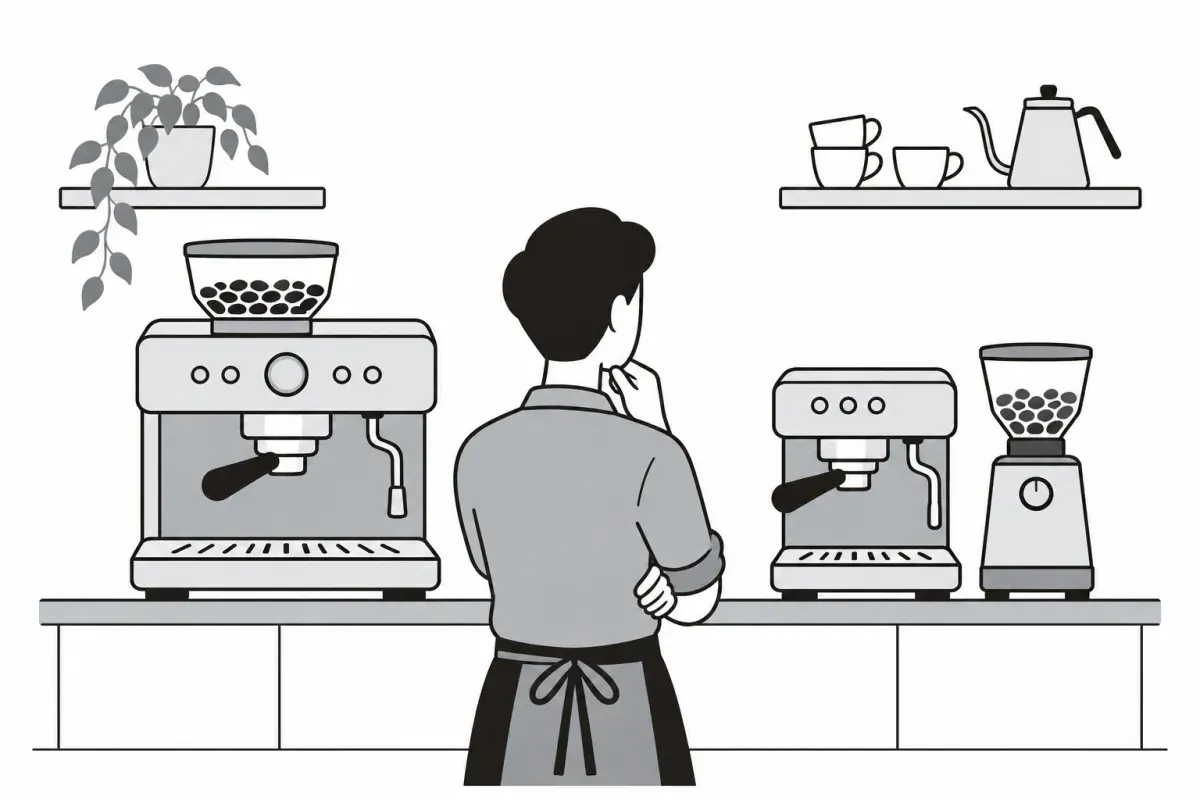
The more helpful versions go further and dose and tamp for you. That matters because uneven tamping is the most common reason a beginner's shots come out inconsistent.4 If a first week of sour, unpredictable shots is what you dread, assisted tamping is the feature to pay for, ahead of a touchscreen.
The catch is that convenience is the whole case. If you would enjoy the fiddling, you are paying for help you don't need. Buy the all-in-one for ease, and be honest with yourself that ease is what you want.
Where built-in grinders fall short
The usual weakness is adjustment. Most built-in grinders move in clicks, and when the clicks are few, the gap between two settings can leave you stuck between a sour shot and an over-extracted one.5 Stepless or very fine adjustment solves that.
Opinion splits on whether steps are acceptable at all. Our take: a stepped grinder is fine if it has plenty of settings and you mostly drink medium or darker roasts from the same bag. Light roasts and frequent bean changes need finer control than most built-ins offer.
The second weakness is stale coffee. A hopper-fed grinder holds ground coffee inside between uses, so the first shot of the day often has stale grounds in it.6 The fix is to grind and bin a little first, which costs beans, and to keep only a few days' worth in the hopper with the rest sealed in the bag.
In the store, count the grind settings and ask how the burrs come out for cleaning.
Before you buy an all-in-one
- How fine are the grind steps?: Few clicks leave gaps between sour and harsh
- Do the burrs come out easily?: Removable burrs make cleaning old oils simpler
- Will it fit under the cabinets?: Measure depth and height, hopper included
- Does it help with tamping?: Assisted tamping eases the first weeks
- Can you get it serviced locally?: One fault can stop both halves
One box means one repair
Tie the grinder to the machine and you tie their fates together. If the grinder motor fails, the whole setup can be out of action, and the repair is more complicated and costs more.7 The two halves also wear differently: burrs dull, while machines scale up and need new gaskets. Tight cases make burrs harder to remove, and opening a built-in grinder for a deep clean may void the warranty.8
Upgrades are the other half of this. With separate gear you replace one piece when your taste outgrows it, and the grinder is the piece to upgrade first. With an all-in-one you replace everything, or you buy a standalone grinder anyway and find room for it. You can keep the built-in one for decaf, which is a decent consolation.
If you are an upgrader by nature, go separate now. If you keep appliances until they die, this matters less; just check that service is available where you live.
Measure before you assume it saves space
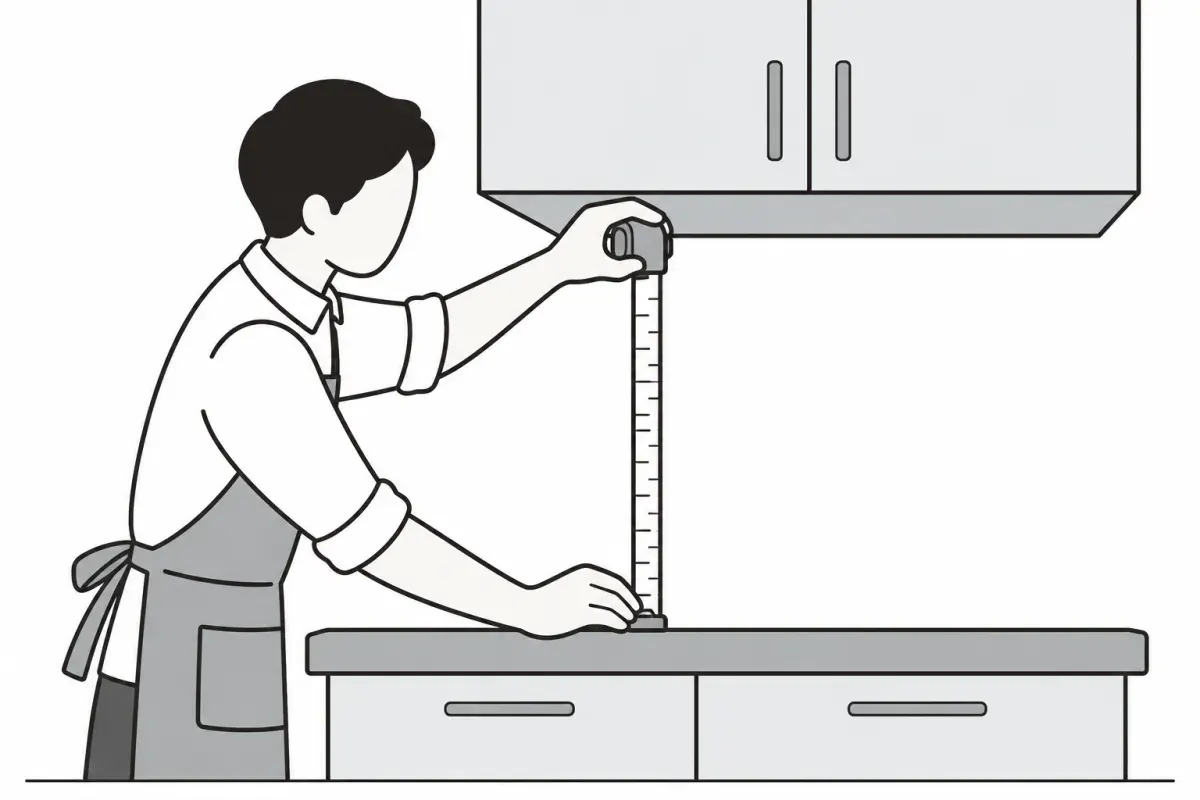
An all-in-one does not automatically take less room. One box is tidier than two, with less to wipe down and no carrying grounds from one appliance to the other. But these machines are large, and the bean hopper on top is the part that gets forgotten. Measure how deep the counter is and how much height you have below the wall cabinets, hopper included.9
Many standalone grinders are small. A compact machine and a compact grinder can share a similar footprint, or split across two spots: grinder in the corner, machine by the sink. Two units go where your routine wants them; one unit goes where it fits.
Tape the footprint out on the counter and hold a ruler up to the cabinets. Choose the all-in-one for space only if two appliances truly won't fit.
“Before you default to an all-in-one for space reasons, actually measure. You might be surprised.”
How to decide
Start with how hands-on you want to be, and ask the same of everyone else who will use the machine. If the household wants to press a button and walk away, neither option here is right. Look at our ranking of super-automatic espresso machines, and accept a shot that sits below what a well-dialed semi-automatic makes.
If you want to learn but keep it simple, buy an all-in-one with fine grind adjustment and, ideally, assisted tamping. If you want the best cup your money can buy, or you switch beans often, choose separately from our rankings of semi-automatic espresso machines and espresso grinders, and give the grinder the larger share.
Either way, buy a scale with a timer. A kitchen scale that rounds to the gram can't see the one-gram differences that change a shot, so pick one that reads to a tenth of a gram.10 Then use fresh beans and expect to nudge the grind as the bag ages. That is normal on any grinder.
One box or two. How hands-on do you want to be?
- Press a button and go: Look at super-automatics and accept less control
- Learn, but keep it simple: An all-in-one with fine grind steps and assisted tamping
- Make it a hobby: Separate machine and grinder, with more budget on the grinder
So, one box or two? If what you want is a calm morning and a short learning curve, the all-in-one is a fair buy, as long as you have checked its grinder as carefully as its looks. If you can already picture yourself comparing beans, give the grinder its own spot on the counter and you won't have to buy twice. Either way, you now know what to look at in the store, and it isn't the screen.
Reviews and rankings
- 11st-line.com “Entry-level integrated machines offer all-in-one convenience under $700.”
- 2Clive Coffee “grind quality is the single biggest variable in espresso. More than the machine, more than the water, more than the beans”
- 3Seattle Coffee Gear “You know you won’t end up with a grinder that can’t quite grind fine enough for your machine when it’s built right into the espresso machine”
- 4EspressoVerdict “removing the single most common source of inconsistent shots for beginners”
- 5Cafelista_Coffee · 11:23 “between each click, the gap is huge. Sometimes you're stuck between an under extracted and sour or over extracted.”
- 6Daddy Got Coffee · 10:01 “very often the first shot that you make with these things very often has actually stale coffee grounds in it”
- 7Clive Coffee “When they're combined, a grinder motor failure can mean your entire espresso setup is out of commission — and repair is more complex and costly”
- 81st-line.com “Accessing grinder internals for deep cleaning may void warranties.”
- 9Coffee Tea Matcha Ritual · 1:57 “Check your counter depth and the clearance under your cabinets for the bean hopper.”
- 10Coffee Tea Matcha Ritual · 6:41 “since a kitchen scale that reads in whole grams is too coarse to tell an 18 g dose from a 19 g one.”