Espresso on a budget
What $200, $500 and $1,000 each buy you, and where the money should go first.
By the Espresso Rated editors · 5 min read · Published Nov 13, 2026
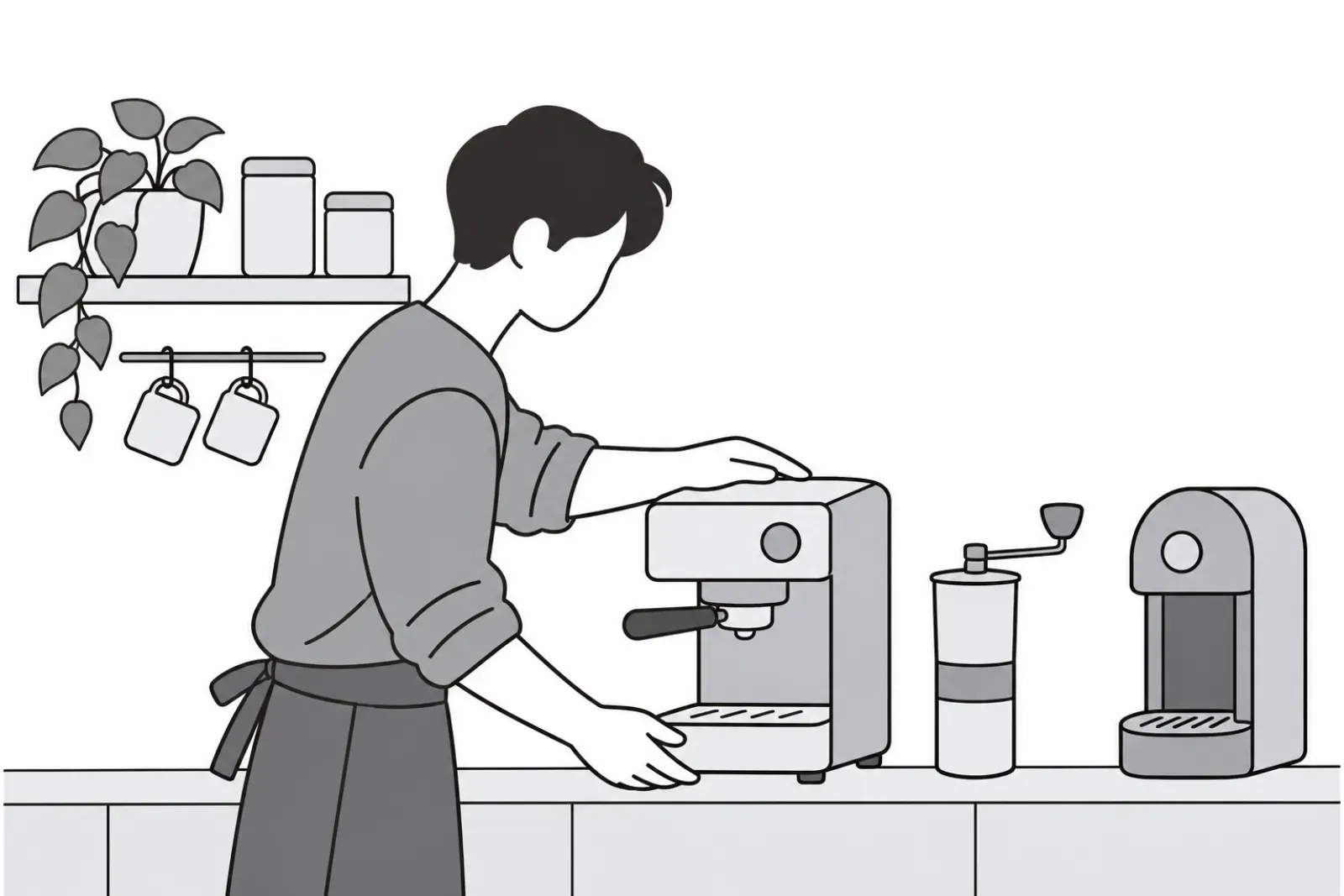
You have a number in your head, a pod machine you have outgrown, and a nagging fear of spending the money on something that makes sour coffee. That fear is reasonable. Espresso is less forgiving than drip, and the cheapest machines can be hard to use and uneven from shot to shot.
The answer is to stop shopping for a machine and start budgeting for a setup: a machine, a grinder that can grind fine enough, and a few small things nobody mentions on the box. Decide what you drink and how much fuss you will tolerate, then spend in that order.
Start with what you drink. What do you drink most?
- Straight espresso: A lever maker with a capable hand grinder
- Lattes and cappuccinos: A pump machine with a steam wand, grinder bought separately
- Whatever is easiest: An all-in-one with a built-in grinder
The grinder gets its money first
The grinder decides how your coffee tastes more than the machine does, so it gets funded first. Espresso needs a fine, even grind. Blade grinders and bargain burr grinders produce an uneven one, and the cup turns out bitter and sour at once.
A workable rule of thumb is to spend about half as much on the grinder as on the machine.1 If you want electric, do not go below roughly $150; under that, wait and save.2
On a tight budget, grind by hand. Hand grinders give you sturdy, long-lasting burrs for less money, and the price is arm work each morning. Skip the plastic-bodied, ceramic-burr kind made for pour over; it cannot hold an espresso grind. Whatever you choose, pick a popular model from an established maker, because other owners will already have shared the starting settings you need.
“the machine matters a whole lot less than the grinder does”
Around $200, choose one compromise
At $200 all in, you cannot have everything, so pick the compromise you can live with. There are two sensible routes, and they suit different drinkers.
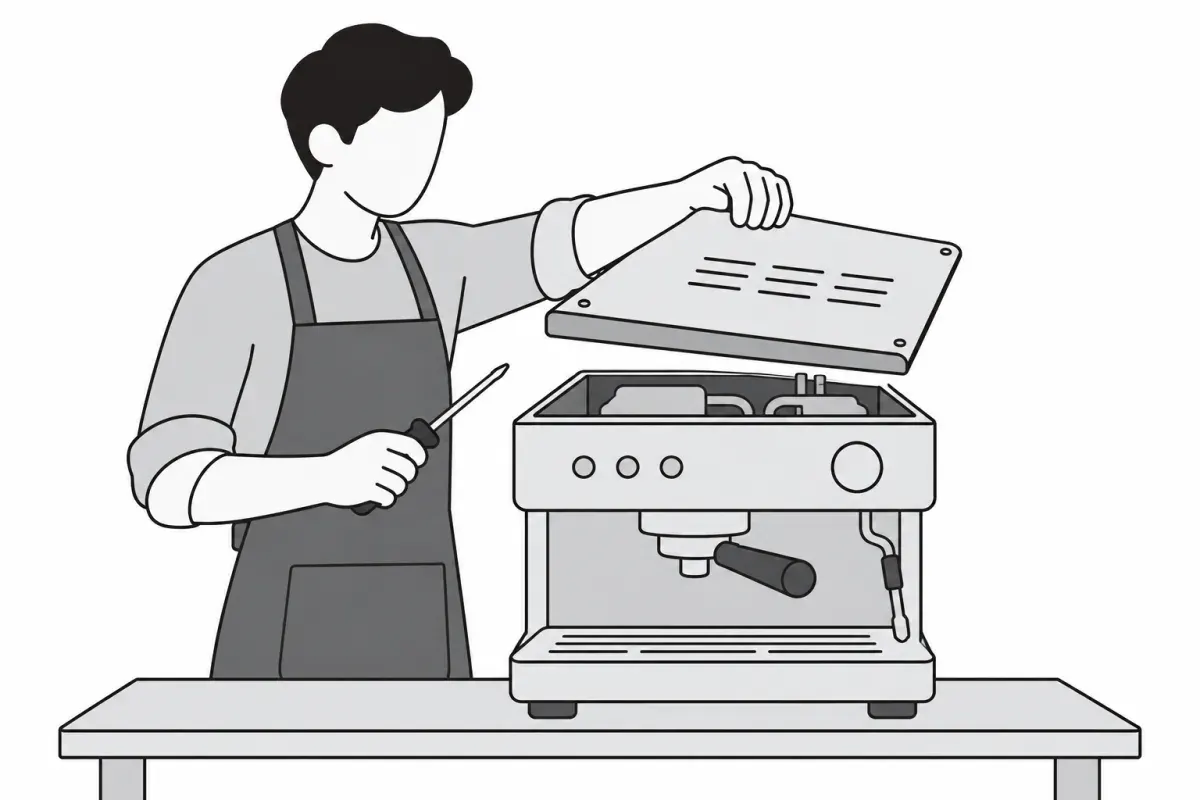
If you drink espresso straight, go manual. A lever maker can cost as little as $120, and with a capable hand grinder and a kettle it makes shots far better than the price suggests.3 The catch is plain: no milk steaming, a slow routine, and a learning curve before the shots come out right.
If you want lattes, buy an inexpensive pump machine with a steam wand and start with its pressurized basket and pre-ground coffee. That basket forgives a poor grind, though the shots will not match a standard basket's.4 Opinion splits on whether this is a sensible start or a dead end. Our take: it is a fine way to begin, provided the machine ships with a standard basket too, so you can move on once a grinder arrives.
Around $500 buys a proper setup
This is the budget where a machine and a separate grinder both fit, and where most people should aim. Set aside the grinder money first, then shop the machine with what remains. If the one you want lists a little over your limit, wait; sale prices can drop well below list.
Ignore the pump pressure printed on the carton. Look instead for temperature control (a PID), pre-infusion that wets the coffee gently before full pressure, and a pressure-release valve. Without that valve, unlocking the portafilter too soon after a shot sprays water across the counter.5
Then choose your heating trade-off. Fast-heating machines are ready in seconds or about a minute, which matters on a weekday. Most at this price still make you wait between pulling a shot and steaming milk, and you will feel it when making lattes for guests.
The built-in grinder divides opinion. An all-in-one is a fair buy if you want espresso without a hobby and one box on the counter. If you expect to chase better shots or change beans often, buy separate: built-in grinders are entry level, and a separate one can be replaced later.
“that big 15 bar number on the box tells you almost nothing”
Toward $1,000, you pay for build
More money buys a sturdier, longer-lived machine rather than a clearly better shot. Unless a machine lets you vary pressure during the shot, an expensive one does not produce noticeably better espresso than a cheap one.6 So spend the extra on things that last.
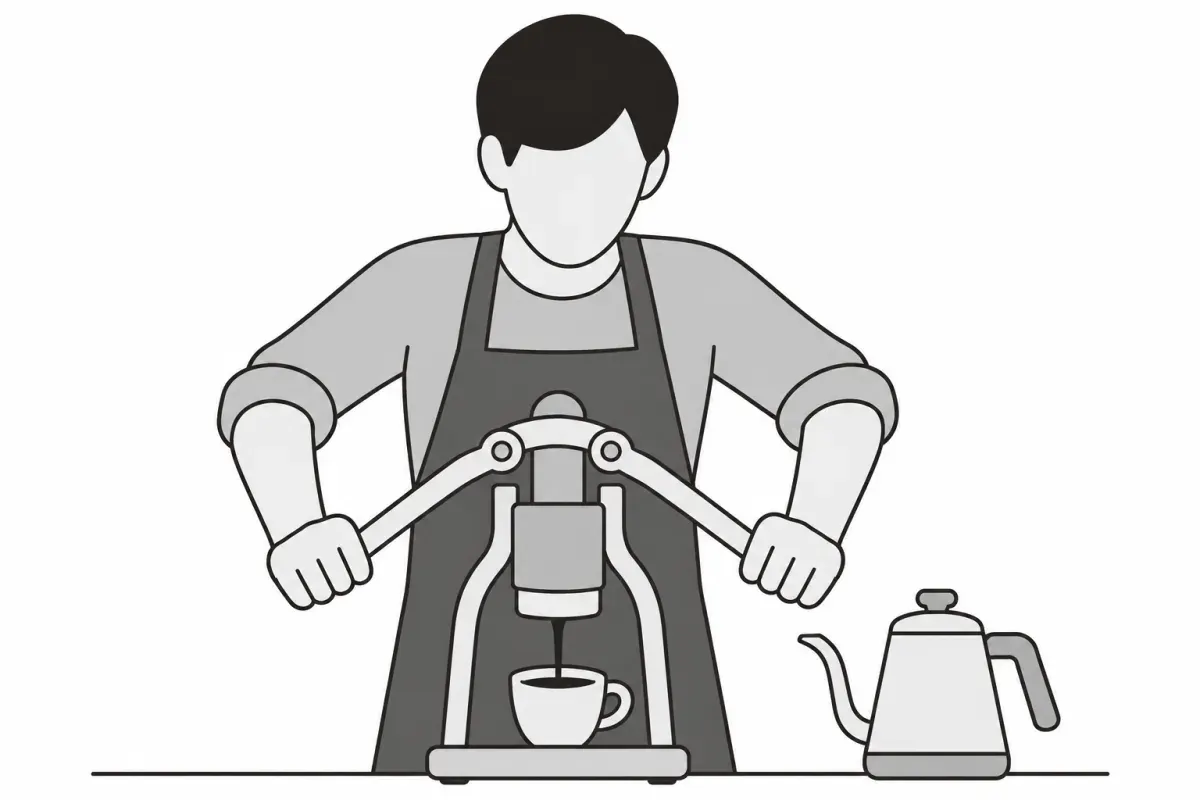
That means metal where cheaper machines use plastic, a heavier boiler that holds temperature and steams harder, and a body you can open and service with parts that are easy to find. Insist on a standard 58 mm portafilter, which opens up a wide choice of baskets, tampers and screens.7 Smaller portafilters limit what you can upgrade later.
The catch is the morning. Traditional boiler machines can need many minutes to heat, and a single boiler still makes you wait before steaming. If milk drinks are most of what you make, look for a design that brews and steams at the same time. And keep the grinder in proportion: a good electric one is a few hundred dollars.
The costs that are not on the box
Keep a slice of any budget back for the things that make the machine work. Budget machines often arrive with a poor tamper or none, and no milk pitcher, so check what is in the box before comparing prices.
Buy a scale. Weighing coffee in and espresso out is what makes one shot like the last, and built-in dosing drifts whenever you change beans or grind. Fresh beans are the one place not to economize.
Water matters more than newcomers expect. Calcium builds up inside the boiler until it scales and fails, so fill the tank with filtered water from the start.8 Finally, register the machine: some makers extend a one-year warranty to two or three years when you do.9 A known coffee brand with a large owner community is worth more than extra features from a name with no track record.
Before you buy
- Is the grinder funded?: Set that money aside before choosing a machine
- Will it fit the counter?: Measure the spot where it will sit
- What is in the box?: Look for a proper tamper and a standard basket
- How long does it heat?: Ask about the wait between shot and steam too
- Is the maker established?: Parts, warranty and an owner community matter
What to do next
Write down three things before you open a shopping tab: what you drink most, how rushed your weekday morning is, and how much counter you can spare. Measure that counter. A slim machine suits a small flat, and a big all-in-one needs room.
Then split the money: grinder first, machine second, a little for the scale, tamper and beans. Start with our ranking of espresso grinders, then choose among the semi-automatic espresso machines that fit what is left. If you drink espresso straight and money is tight, look at manual and lever espresso makers instead.
Expect some wasted shots early on. Adjusting, weighing and trying again is how the machine starts to make sense, so buy an extra bag of beans and give yourself room to get it wrong.
Whatever the number in your head is, it is enough to leave the pods behind. Spend it on a setup rather than a machine, grinder first, and match it to the drink you make most mornings. The early shots will be rough, the later ones will not, and you will know why.
Reviews and rankings
- 1Bottom Line, Inc. “Rule of thumb: Your grinder should cost 50% of the cost of the espresso machine.”
- 2Lance Hedrick · 16:33 “I wouldn't really recommend anything below maybe that like price point of the Shardor, about 150 bucks”
- 3Top Ten Reviews “If you're a confident at-home barista, you can get a manual espresso machines for as little as $120”
- 4Tom's Coffee Corner · 4:12 “it's not going to be as good as one that's made here in advaned mode which is what I'm going to show you but it's going to get you started and you don't have to invest in a grinder”
- 5Eric the Coffee Guy · 7:51 “if you don't give it time to let the pressure disperse slowly, it will spill. It'll it'll just water will spray everywhere when you remove the port filter”
- 6Lance Hedrick · 11:21 “you're not getting noticeably better shots out of a $5,000 machine and a $50 machine, assuming that they are not profiling”
- 7Whole Latte Love · 5:04 “the 58 mm group supports a huge range of baskets, screens, tampers and portafilters.”
- 8Bottom Line, Inc. “Put filtered water in there—calcium builds up in these boilers over time, and they’ll eventually scale and fail.”
- 9Eric the Coffee Guy · 6:10 “if you you actually register your device, you end up getting a 2-year warranty, sometimes even a three-year warranty, depending on the model”